


Kitesurfing injuries: what recent scientific literature shows
Updated: Dec 17, 2025
By Fabrice Baret – Sports Physiotherapist
Founder of Kitesurf Rehab
INTRODUCTION
Kitesurfing is not a contact sport in the classic sense of the term. However, literature reviews and epidemiological studies published in recent years place its injury incidence in orders of magnitude comparable to certain team sports described as "contact".
This observation is not anecdotal. Above all, it forces us to move beyond a simplistic understanding of risk in kitesurfing. Here, injury is not linked to an opponent, but to a complex interaction between aerological conditions, mechanical stresses, neuromuscular fatigue, and decision-making in a dynamic situation .
This article is based on a critical review of recent scientific literature on kitesurfing and board sports. The aim is not to present the discipline itself, but to provide additional insights for experienced practitioners , enabling them to refine their risk management and improve their endurance on the water.
KITESURFING INJURIES: EPIDEMIOLOGY
Epidemiological studies dedicated to kitesurfing converge on one point: the majority of injuries involve the lower limb, followed by the spine (primarily lumbar) and the shoulder. A large study published in 2024 in the Clinical Journal of Sport Medicine reports an overall incidence of approximately 8 injuries per 1,000 sessions , with knee injuries being the most common, followed by ankle and foot injuries, and then lumbar spine injuries.
In practice, this distribution makes sense: kitesurfing is a sport of reception, load absorption, and control under stress. When something goes wrong, it's the structures designed to absorb and stabilize the force that bear the brunt.
KNEE: RECURRING INJURIES

The knee is the most frequently reported injury site in kitesurfing. And here's an important point: we're not talking about just one "type of knee injury." In the literature and in practical experience, we mainly find injuries related to poorly controlled landings and combined stresses (compression + shear + rotation).
Typical diagnoses described or observed in sliding sports and kitesurfing cohorts include, but are not limited to:
sprains of the medial collateral ligament (MCL) during a valgus landing
Anterior cruciate ligament (ACL) injuries due to rotational mechanisms, especially when weight-bearing is asymmetrical
Meniscal lesions (compression + rotation)
Patellofemoral pain or patellar tendinopathy, usually due to repeated overload (volume + landings)
Many experienced riders already suspected this, and science has now confirmed it. The problem isn't "height" itself. The most damaging forces often arise from timing errors, a wing that loses lift at the right moment, an imperfectly aligned landing, or unwanted rotation at the end of the movement.
In practice, a moderate jump landed poorly can be more damaging to the knee than a higher jump that is properly controlled. Prevention should therefore focus on shock absorption capacity, rotational control, and tolerance to repetition under fatigue.
FOOT AND ANKLE: THE DISCREET BUT CRUCIAL LINK

Foot and ankle injuries account for a significant proportion of kitesurfing injuries. These are often initially considered minor, but they quickly become chronic if stability and shock absorption capacity are inadequate.
The mechanisms are typically linked to hard landings, insufficient cushioning, inadequate dynamic stability, or improper strap or boot adjustment. Fatigue plays a major role: when the body is less reactive, the ankle absorbs the impact instead of being able to absorb it.
Prevention: regular work on dynamic stability, foot control, and specific strengthening. Even a few minutes a week can make a real difference, provided it is consistent and regular.
LUMBAR SPINE: THE VOLUME INJURY
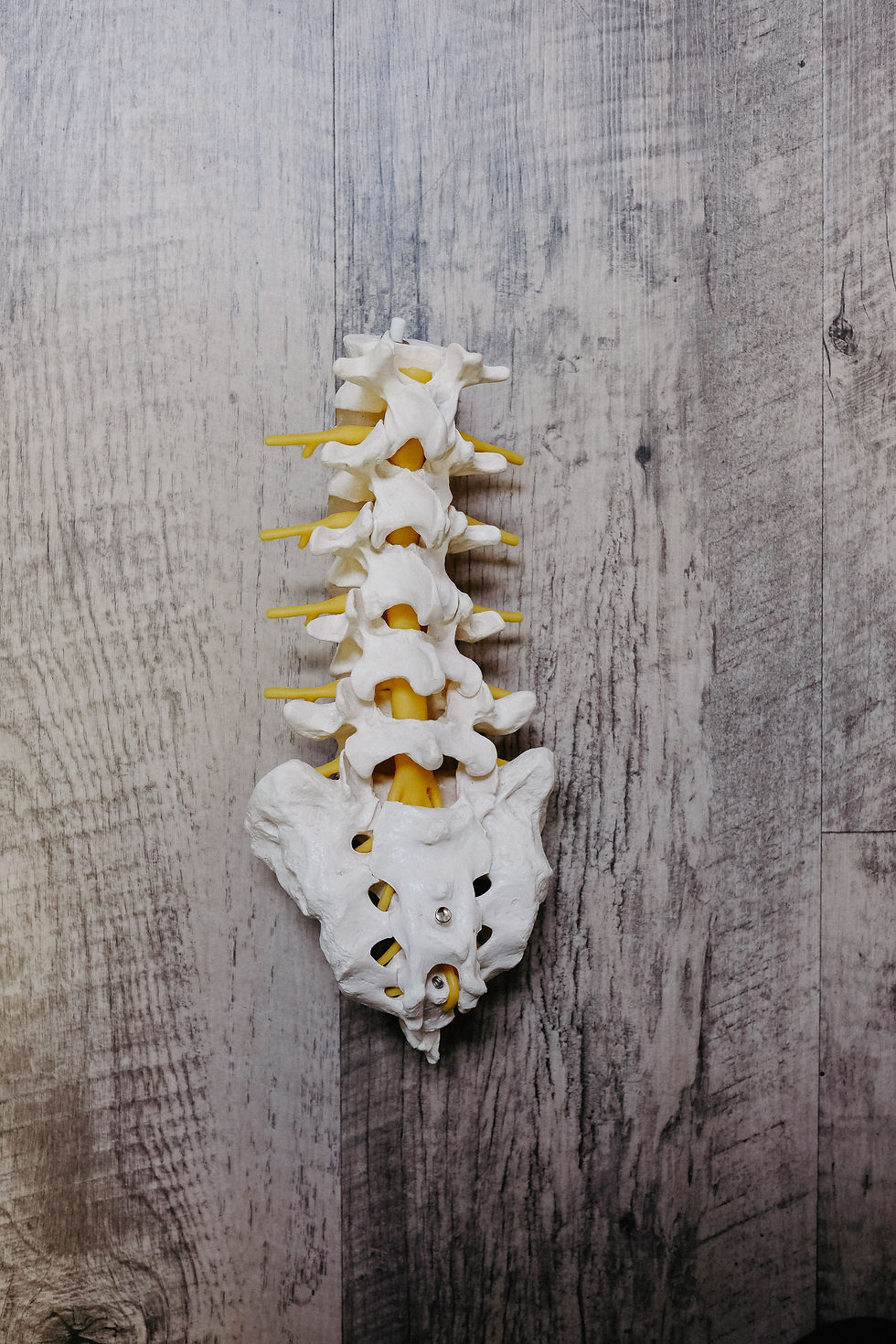
Lower back pain accounts for 15 to 25% of reported injuries , particularly during intensive training camps or trips.
The literature clearly shows that these are rarely acute traumas. The pain appears gradually, related to:
the accumulation of sessions
overall fatigue
decreased trunk control
A prospective study published in the Muscles, Ligaments and Tendons Journal highlights a direct link between lower back pain and decreased perceived performance. More recent work published in Medicina confirms that these limitations are particularly pronounced among non-professional athletes, despite a good level of technical skill.
On the ground, the observation is simple: it is not a bad session that poses a problem, but the accumulation of sessions without recovery or targeted reactivation of the trunk .
SHOULDER: LESS FREQUENT, BUT DEPENDENT

Shoulder injuries account for approximately 10 to 20% of cases .
Studies on overuse injuries show that the shoulder becomes symptomatic when scapular stability and rotator endurance are insufficient to cope with repeated and sometimes unforeseen pulls.
In an experienced rider, persistent shoulder pain is rarely an isolated event. It is often an early sign of an imbalance or poorly compensated overload .
CONDITIONS THAT INCREASE THE RISK
The literature highlights several factors that significantly increase the risk of injury:
less than two years of practice
unstable conditions (gusty winds, rapid changes)
Accumulated fatigue , typical at the end of an internship or trip
These factors alter coordination, decision-making, and absorption capacity, mechanically increasing exposure to risk.
For an experienced rider, the challenge is therefore not to reduce commitment, but to know when commitment mechanically becomes less profitable .
EQUIPMENT: A QUESTION OF SUITABILITY
Studies do not show a direct link between a specific type of equipment and a net increase in the risk of injury.
On the other hand, they show that experience is protective , primarily through a greater ability to:
adapt the equipment to the conditions
adjust the commitment to the state of fatigue
giving up at the right time
The problem is therefore not the equipment itself, but the mismatch between the rider, the conditions and the choices made that day .
Why literature reviews are relevant in kitesurfing
Kitesurfing is evolving rapidly. The human body, much less so.
Drawing on scientific literature allows us to:
to objectively identify the areas that are actually at risk
going beyond widely held beliefs
prioritize prevention levers
improve the sustainability of the practice without reducing commitment
It is within this logic that the work carried out within Kitesurf Rehab takes place: continuous scientific monitoring , combined with field analysis.
CONCLUSION
Kitesurfing is not a contact sport, but recent scientific data clearly shows that its exposure to risk is far from insignificant.
For experienced riders, the question is not about practicing less, but about better understanding when, how and why the risk increases .
Riding for a long time is not a matter of luck. It is the result of a careful reading of mechanical constraints , informed by science and translated into concrete decisions on and off the water.
Moving from understanding to preparation
Understanding the mechanisms of kitesurfing injury is an essential step. The next step is to prepare your body before increasing the volume of sessions , especially before a training course or trip.
It is with this logic in mind that Ready to Kite – Premium SOLO was designed.
Pre-kitesurfing course preparation program – all levels
Premium SOLO is aimed at all practitioners who are going on training courses or trips and who want to:
to arrive physically ready , even after a less active period
better cope with repeated sessions
reduce the risk of knee, back, ankle and shoulder pain
to fully enjoy the internship, without experiencing fatigue from the very first days
Regardless of your level, the principle remains the same: prepare the structures that can absorb the most stress, before asking more of them.
What Premium SOLO contains
sessions structured around reception, absorption and control
progressive training of the core, lower limbs and shoulder girdle
realistic routines, compatible with a busy schedule
an approach based on the biomechanics of kitesurfing , not on raw performance
Methodological note
This article is based on a review of recent scientific literature on kitesurfing and board sports, including epidemiological and biomechanical studies and work on overuse injuries, published in international sports medicine journals.
Key references:
– Lange B. et al. (2024). Injury incidence and patterns in kitesurfing: a prospective epidemiological study. Clinical Journal of Sport Medicine.
– Fong D.T.P. et al. (2025). Lower limb loading and landing mechanics in board sports: implications for knee injury risk. Orthopaedic Journal of Sports Medicine.
– Maffulli N. et al. (2020). Overuse injuries of the spine in board and water sports. Muscles, Ligaments and Tendons Journal.
– Silva B. et al. (2022). Risk factors and injury mechanisms in water-based board sports. Medicina.
Comments